G / C
ALLFREDONE

GENRE
Local co-op, puzzle
ENGINE
Unity (C#)
ROLE
Game designer, level designer, game programmer.
TEAM SIZE
4
ITCH.IO PROFILE
GAME STATUS
Prototype
DOCUMENTS
GOALS
-
Real cooperation, not just task division
-
Shared, binding progression system
-
Light, comedic tone, without sacrificing strategic depth
AllfredOne is an isometric co-op puzzle game: two clones must complete tasks for their extremely lazy creator, gaining abilities only through a shared stat system.
game
MY CONTRIBUTION
The project stems from an original idea of mine, first developed with a university team, then redesigned independently in the version documented in the current GDD.
Among the most significant contributions:
-
Shared Stat System
-
Result: mechanics that prevent the "one-man-army" effect and force constant dialogue between players.
-
Problem: turning stats — inherently an individual mechanic — into a tool for genuine cooperation, avoiding two single-player experiences played in parallel.
-
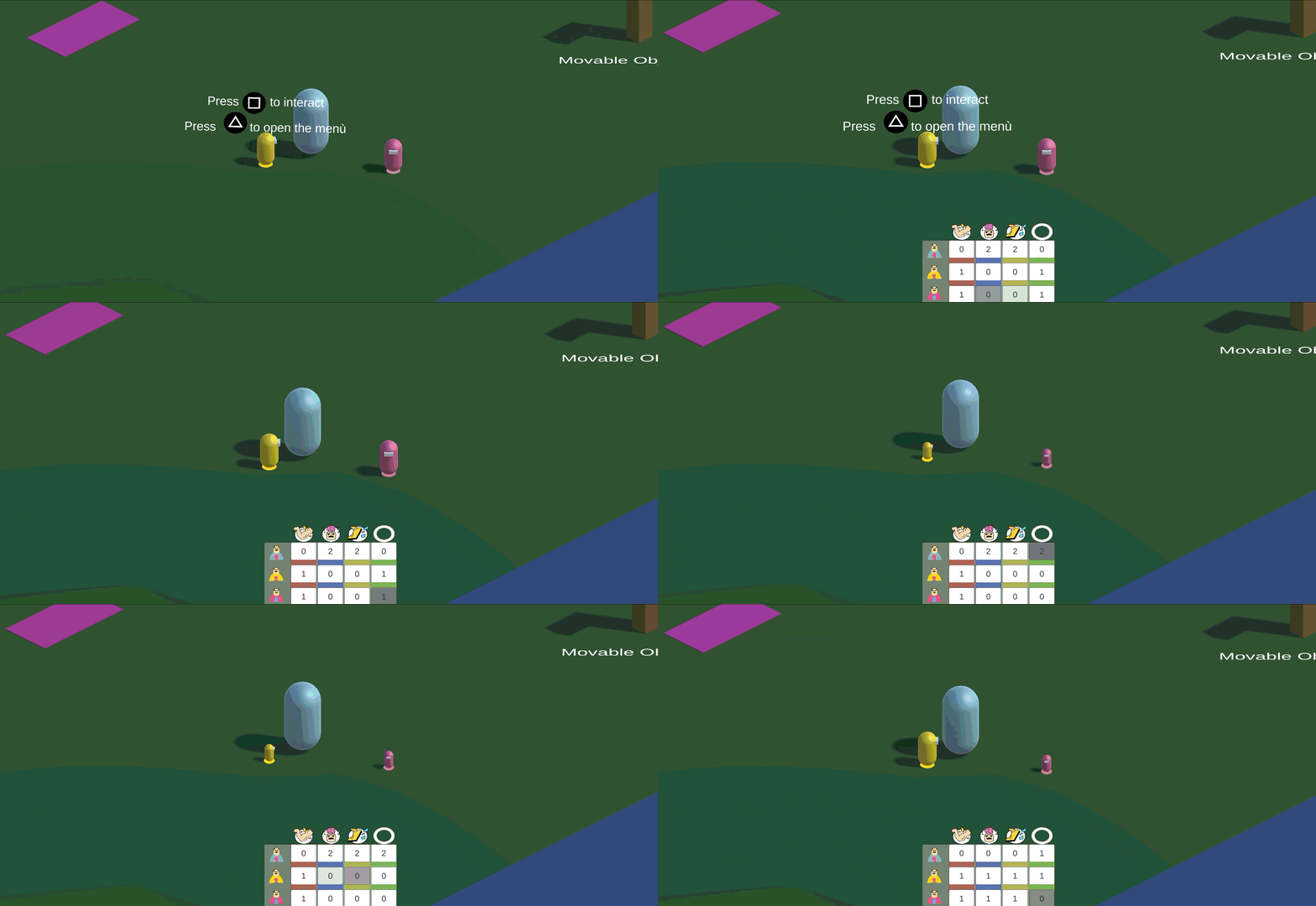
Solution: a shared, limited point pool (2 per stat), distributable only through a single menu with exclusive access, where every choice one player makes becomes a constraint for the other.
-
-
Stats as Collaborative Mechanics
-
Result: cooperation stops living only in the point-distribution phase and becomes a constant, moment-to-moment action.
-
Problem: making sure that using stats — not just distributing them — also required real joint action.
-
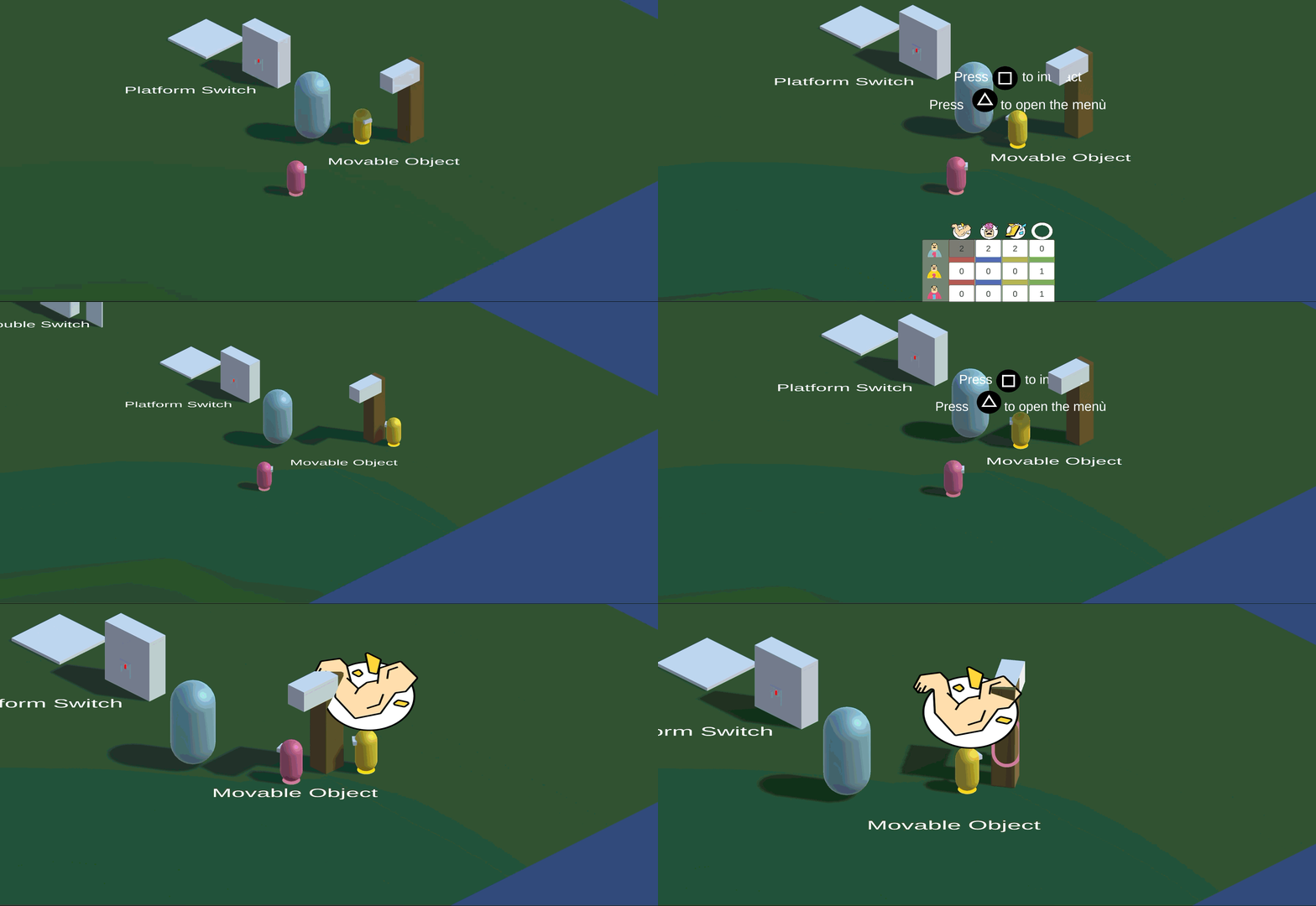
Solution: each stat changes its nature (not just its intensity) depending on whether it's used by one or both players — e.g. Strength moves objects alone, rotates them in two; Intelligence activates single switches or remote combinations — reinforced by the level design itself.
-
-
Solo-Phase Mechanics Redesign
-
Result: reduced cognitive load, more usable, dynamic gameplay with higher player interaction.
-
Problem: evolving the university prototype into a more solid, readable, highly interactive system.
-
Solution: revision and rebalancing of stat points, the number of stats, and their effect when shared by two players.
-
Level Design Showcase
Level 1 — AllfredOne's House (Tutorial)
Level goal: teach the four base stats (Strength, Intelligence, Agility, Size) through action rather than explanatory text, keeping the comedic pace of the narrative opening.
Framework and references: an "isolated-problem onboarding" structure typical of co-op puzzle games (Human: Fall Flat, It Takes Two) — each new mechanic is introduced in a contained space before being combined with the others.
Main beats:
-
Entering the house through a pipe (introduces Size)
-
Opening the garage with a double switch (introduces Intelligence)
-
Building a "ladder" out of movable furniture (introduces Strength and Agility in combination)
-
Cooperative rotation of the box to pull it out of the room (introduces two-player interaction)


Level 2 — Post Office
Level goal: move players from guided learning to environment-guided learning, introducing two more technical mechanics (timed switch, piston) without the support of explicit dialogue.
Framework and references: "environmental" design in the style of Death's Door / God of War Ragnarok, where signage, NPCs, and spatial composition replace the text tutorial.
Main beats:
-
Gathering information from an NPC (reinforces exploration as a tool for progression)
-
Double door with combined local/remote activation (introduces remote cooperation)
-
Timed platform in the warehouse (introduces time pressure)
-
Faulty piston to force manually (introduces an object with movement constraints)


Level 3 — Complaints Office
Level goal: break the horizontal structure seen up to this point with a vertical 3D puzzle, increasing spatial complexity without introducing new stats.
Framework and references: an explicit nod to the classic arcade game Q*bert, reinterpreted in a co-op key with the addition of elevators and pressure panels that respond to weight inversely.
Main beats:
-
Repositioning and rotating the initial ramp
-
Crossing a narrow area to reach a hidden elevator
-
Cooperatively carrying a piston-box across multiple floors via elevators
-
An "inverse" pressure panel (more weight = less height) as the mechanic's final twist


